HVAC Control
Monitor compatible heating, cooling and ventilation equipment, review temperatures, manage schedules and identify alarms requiring investigation.

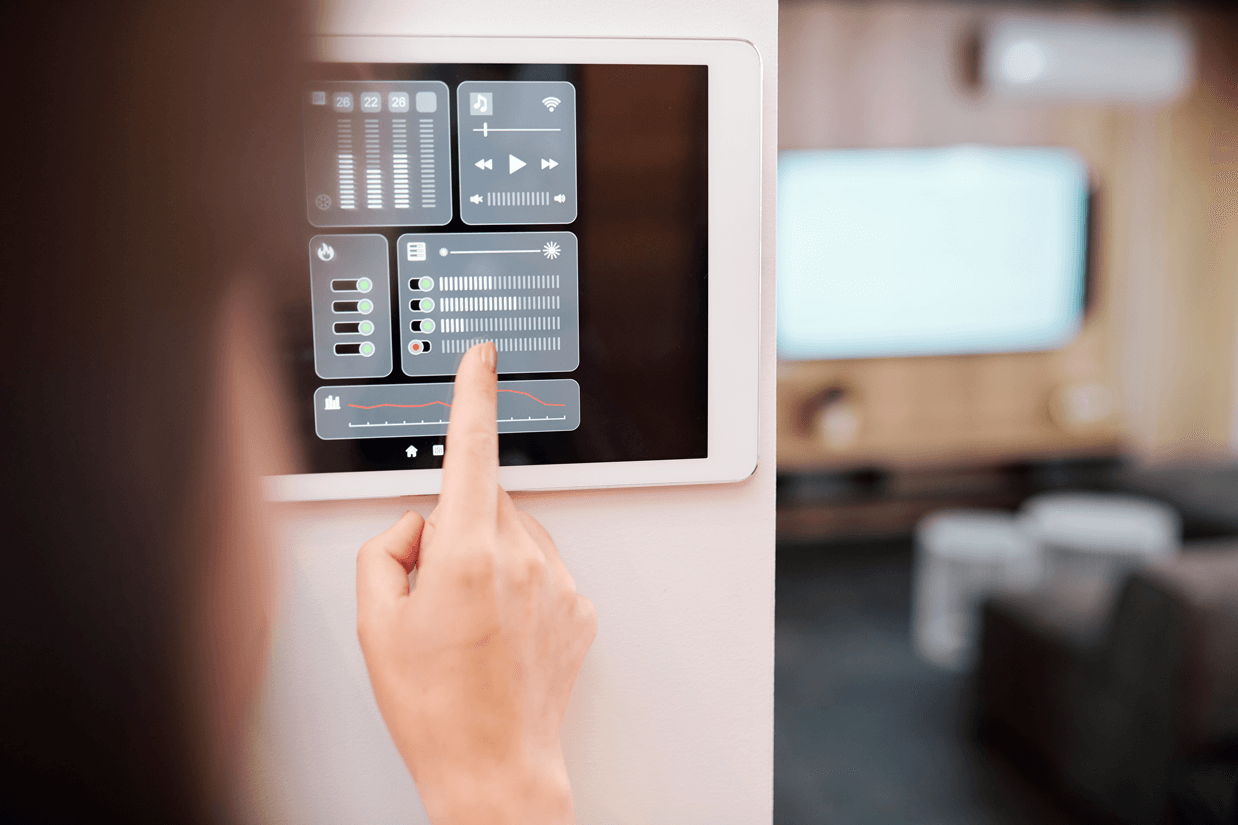
Smartopia delivers Building Management Systems Toronto property owners and facility teams can use to monitor and coordinate HVAC, lighting, energy, security, access control and commercial AV. Our BMS Integration Toronto services connect compatible systems through centralized dashboards, automation rules and secure building networks.
A building management system provides a centralized operational layer for monitoring and controlling compatible HVAC equipment, lighting, meters, sensors, alarms and other connected building systems. It helps authorized teams review system status, respond to faults, adjust schedules and manage building performance through a coordinated interface.
A successful Building Management Systems Toronto project begins with the building’s actual operational requirements. The system architecture should reflect equipment compatibility, control priorities, network design, occupant needs, maintenance responsibilities and future expansion plans.
Smartopia integrates smart building technology as part of its wider commercial AV and technology solutions for Toronto and GTA properties.
Building Automation Systems Toronto projects can combine multiple operational technologies into one coordinated environment. The available integrations depend on installed equipment, supported communication protocols, manufacturer interfaces and the level of control permitted by each building system.
Monitor compatible heating, cooling and ventilation equipment, review temperatures, manage schedules and identify alarms requiring investigation.
Coordinate lighting zones, time schedules, occupancy-based operation and approved energy-management strategies through Smart Building Controls.
Collect data from compatible meters and systems to support consumption tracking, benchmarking and investigation of unusual operating patterns.
Coordinate approved access-control events, visitor systems, video intercoms and security notifications without exposing protected operational networks.
Connect selected room controls, displays and shared-space technologies with occupancy schedules and approved building automation functions.
Monitor connected environmental sensors, equipment status and configurable alarms through centralized dashboards and notification workflows.
BMS Integration Toronto connects compatible controllers, sensors, equipment and software platforms so building information can be monitored and managed more consistently. Integration may involve native communication protocols, approved gateways, application interfaces or staged replacement of unsupported components.
The objective is not to place every device on one dashboard without evaluating risk. Each integration should have a clear operational purpose, documented data points, defined permissions and a plan for what happens if a controller, gateway or network connection becomes unavailable.
BACnet is a communication protocol designed for building automation and control networks. Where compatible equipment is available, it can support communication between HVAC controllers, sensors, meters and other building devices from different manufacturers.
Modbus and manufacturer-specific interfaces may be used to retrieve status information or control approved functions. Gateways should be selected according to the required data points, update frequency, network architecture and cybersecurity requirements.
Modern Smart Building Controls increasingly operate across IP networks. This allows flexible communication and remote management, but it also makes network architecture, segmentation, user access and device maintenance essential parts of the BMS design.
Facilities requiring dependable connectivity can coordinate their BMS project with Smartopia’s building-wide networking and Wi-Fi solutions.
A new BMS provides greater freedom to define the control architecture, while a retrofit retains suitable equipment and modernizes selected controllers, networks or interfaces. The correct strategy depends on equipment condition, documentation, protocol compatibility, operational risk, available shutdown time and long-term building plans.
| Project Type | Best Suited For | Important Considerations |
|---|---|---|
| New BMS Installation | New buildings, major renovations and properties requiring a complete control architecture. | Controls specification, network design, integration points, sequences, commissioning and expansion requirements. |
| Phased BMS Retrofit | Buildings with suitable mechanical equipment but aging controllers, interfaces or network infrastructure. | Legacy documentation, compatibility, gateway limitations, phased installation and approved shutdown periods. |
| Full Controls Replacement | Systems affected by unsupported software, obsolete hardware, recurring failures or major operational limitations. | Migration planning, backups, sequence verification, testing, operator training and rollback procedures. |
Smart Building Controls provide facility teams with organized access to equipment status, environmental conditions, schedules, trends and alarms. A useful dashboard should prioritize actionable information instead of presenting every available data point without context.
Present relevant building systems and operational information through role-based interfaces designed for authorized users.
Organize alarms by system, location and priority so facility teams can investigate the most important conditions first.
Review historical temperatures, equipment states, schedules and meter information to support troubleshooting and performance analysis.
Coordinate approved operating schedules around business hours, occupancy and other defined building requirements.
Provide controlled remote visibility where the selected platform, network design and security requirements allow it.
Use suitable trend and alarm information to identify abnormal operating patterns that require professional investigation.
Building Management Systems Toronto projects may coordinate selected functions across security, access control, intercoms, commercial AV and digital signage. Integration should use supported interfaces and maintain appropriate separation between business, guest and operational technology networks.
Compatible access-control and security systems may exchange approved events with the BMS. An authorized access event might activate selected lighting or adjust a scheduled building mode, while security permissions remain controlled by the dedicated security platform.
Occupancy and scheduling information may support approved automation in meeting rooms and shared spaces. Organizations can coordinate building controls with Smartopia’s corporate and conference room AV systems.
Selected building information, room status and approved alerts can be displayed through compatible signage systems. Learn more about digital signage and video wall installation for commercial properties.
Connected Building Automation Systems Toronto properties rely on must be protected as operational technology. Security planning should address device access, network segmentation, software updates, remote connections, backups and the potential operational impact of an unavailable or compromised control system.
Security controls should be proportionate to the building’s operational risk. Remote access should not be enabled simply for convenience without reviewing authentication, encryption, logging and vendor-support requirements.
A professional BMS Integration Toronto project follows a structured process covering operational requirements, existing equipment, communication protocols, control sequences, network architecture, commissioning and handover. This reduces integration uncertainty and creates a documented foundation for future support.
Review equipment, controllers, networks, documentation, operational problems and desired building outcomes.
Define the architecture, points, protocols, dashboards, permissions, sequences and integration responsibilities.
Install and configure approved controllers, gateways, networks, software interfaces and Smart Building Controls.
Test control functions, alarms, trends, permissions and system recovery before training and handover.
Building Management Systems Toronto costs depend on building size, number of integrated systems, existing controller condition, required data points, communication protocols, network upgrades, software licensing and commissioning complexity. A site assessment is required before an accurate project quotation can be prepared.
A BMS Integration Toronto proposal should identify included controllers, gateways, licences, engineering, programming, dashboards, installation, testing, training and support. It should also clarify work requiring mechanical, electrical, security or other qualified contractors.
Smartopia provides Building Management Systems Toronto services for commercial and mixed-use properties. The scope can include system assessment, controls integration, dashboards, building networks, alarms, commissioning and operator training. Mechanical, electrical and other specialist work is coordinated according to the equipment and agreed project responsibilities.
Building automation refers to the controllers, sensors and sequences used to automate equipment or processes. A BMS provides a wider supervisory platform for monitoring and coordinating compatible building systems. In practice, the terms are sometimes used interchangeably, but the exact system scope should always be defined in the project documentation.
Yes. Many existing buildings can be modernized by retaining compatible equipment and replacing selected controllers, interfaces or communication networks. Before recommending a retrofit, the integrator should assess equipment condition, available documentation, protocols, software support, cybersecurity requirements and the operational risk associated with each upgrade phase.
Compatible HVAC, lighting and security systems can often share selected information through a centralized platform. Available functions depend on manufacturer interfaces, communication protocols and security restrictions. Critical controls should retain appropriate independent operation, and integrations should not weaken the permissions or reliability of dedicated safety and security systems.
A BMS can provide the schedules, trend data, metering information and controls needed to identify waste and improve equipment operation. Results depend on the building, equipment condition, control sequences, occupant requirements and ongoing management. Installing a dashboard alone does not guarantee savings without appropriate programming, commissioning and operational follow-up.
BMS cybersecurity can include network segmentation, unique user accounts, restricted permissions, multi-factor authentication, secure remote access, software updates, backups and activity logging. The required controls depend on operational risk and system capabilities. Cybersecurity responsibilities should be documented between the property team, integrator, IT provider and equipment vendors.
These references provide general technical guidance. Requirements applicable to a specific property, building system or organization should be confirmed during assessment and project design.
Contact Smartopia to discuss Building Automation Systems Toronto, BMS Integration Toronto, Smart Building Controls, centralized dashboards and phased building modernization.