PLC Programming
Development, modification and troubleshooting of PLC logic, sequences, alarms, and machine-control functions.


Smartopia provides industrial automation in Toronto for facilities seeking reliable PLC programming, HMI development, control-panel integration, SCADA modernization and measurable process improvement. Our approach supports the full automation lifecycle.
An industrial automation integrator evaluates production requirements, designs the control architecture, programs systems, integrates field equipment, and tests performance. Smartopia connects machines, controls, and networks to create a safe and scalable environment.
Smartopia integrates controls into a coordinated system. Existing equipment can often be assessed, documented and modernized in stages to improve reliability without replacing every machine at once.
Development, modification and troubleshooting of PLC logic, sequences, alarms, and machine-control functions.
Clear operator interfaces for status, process values, alarms, recipes, and diagnostics for faster decisions.
Panel design covering PLC hardware, VFDs, protection devices, power distribution, and field connections.
Integration of motors, drives, remote I/O, conveyors and actuators required for process control.
Machine communication using suitable Industrial Ethernet protocols for reliability and maintainability.
Assessment of obsolete components to create a practical modernization or migration plan.
Choosing the right path depends on equipment condition, production risk, shutdown time, and cybersecurity requirements.
| Project Type | Best Suited For | Key Considerations |
|---|---|---|
| New System | New production lines and facilities requiring complete architecture. | Full design flexibility, initial investment, expansion needs. |
| Partial Retrofit | Mechanically sound equipment but with aging PLC/HMI or drives. | Compatibility, phased installation, controlled downtime. |
| Full Replacement | Systems affected by hardware failure or major obsolete hardware. | Migration planning, backups, risk management during changeover. |
Industry 4.0 connects production data and operational teams to reduce bottlenecks and unplanned downtime while improving process consistency.
Identify recurring production losses and improvement priorities using real-time machine data.
Connect industrial devices while considering system reliability, security, and edge computing.
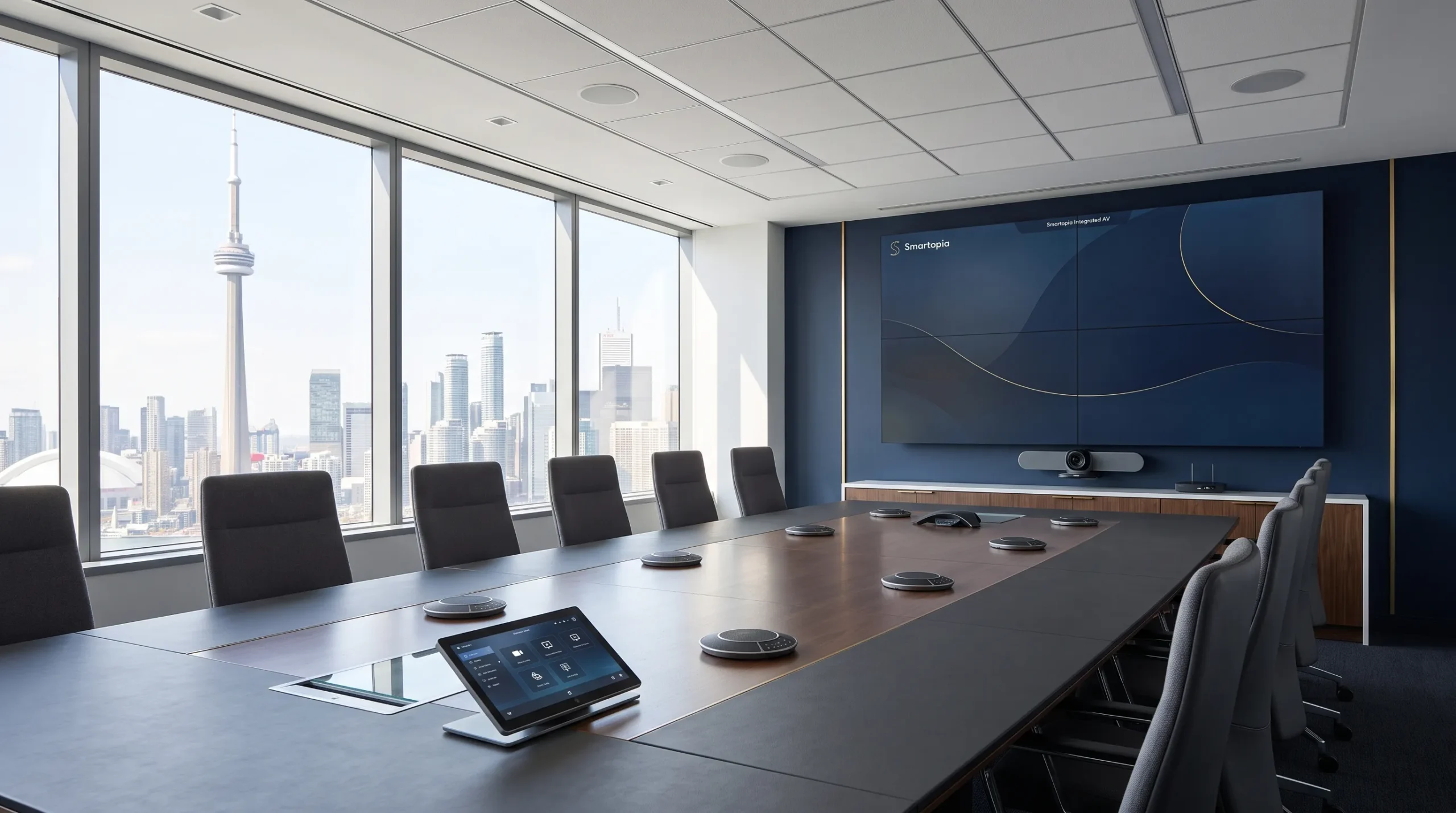
Smartopia supports DCS and SCADA virtualization using suitable VMware or Hyper-V environments, ensuring a clear boundary between business networks and operational technology.
Review the process, equipment, controls, networks, and operational objectives.
Define control architecture, programming requirements, and project documentation.
Test logic, I/O, alarms, interfaces, and equipment operation before handover.
Maintain backups, updates, diagnostics and structured improvement plans.
Smartopia provides services for Toronto and Ontario facilities, including PLC/HMI programming, integration, modernization and virtualization planning.
Manufacturing, food processing, logistics, pharmaceuticals, and more benefit where consistent control and reduced downtime are needed.
Yes. Many PLC systems can be improved through logic updates, HMI redesign, and replacement of selected obsolete components.
It simplifies server management, improves backups/disaster recovery, and makes future system expansion easier and safer.
Through site assessment, offline programming, staging, and simulations, combined with approved plant shutdown schedules.
This includes PLC/HMI backups, I/O lists, network info, test records, and commissioning results per the project scope.
Contact Smartopia to discuss PLC programming, HMI development, SCADA modernization, networking or process optimization.