
Reviewed by: Smartopia Technology Team
Last reviewed: September 2026
Who Provides EV Charger Installation in Toronto?
EV charger installation in Toronto should be planned by an experienced charging-infrastructure team and completed with a Licensed Electrical Contractor for regulated electrical work. The process normally includes a site assessment, electrical load review, charger selection, infrastructure design, ESA notification, installation, commissioning and final documentation.
Multi-unit residential and commercial projects may also require utility coordination, dynamic load management, network connectivity, user authentication, automated billing and a phased expansion plan. Addressing these requirements before equipment is purchased can help prevent incompatible hardware, insufficient electrical capacity and expensive redesigns.
What Does Professional EV Charger Installation in Toronto Include?
A professional EV charger installation begins with the property rather than the charger. The project team should first understand who will use the charging stations, how long vehicles remain parked, how much electrical capacity is available and how the system may need to expand.
A complete EV charging assessment may examine the following requirements:
- Existing electrical service, switchgear and distribution equipment
- Historical building demand and available electrical capacity
- Number and location of proposed charging stations
- Conduit routes, cable distances and parking-garage conditions
- Indoor, outdoor and weather-exposed equipment requirements
- Level 2 or DC fast charging requirements
- Dynamic load management and demand-control options
- Wi-Fi, Ethernet or cellular network availability
- User authentication, energy tracking and payment requirements
- Future charger additions and EV-ready parking infrastructure
- Accessibility, signage, equipment protection and cable management
- ESA notifications, inspections and project documentation
In Ontario, regulated electrical work must be completed through a Licensed Electrical Contractor. The contractor must file the required notification with the Electrical Safety Authority before beginning the installation. Charging equipment should also carry an approved Canadian certification mark suitable for use in Ontario.
EV Charging for Condos, Commercial Buildings and Mixed-Use Properties
Condo EV Charger Installation Toronto
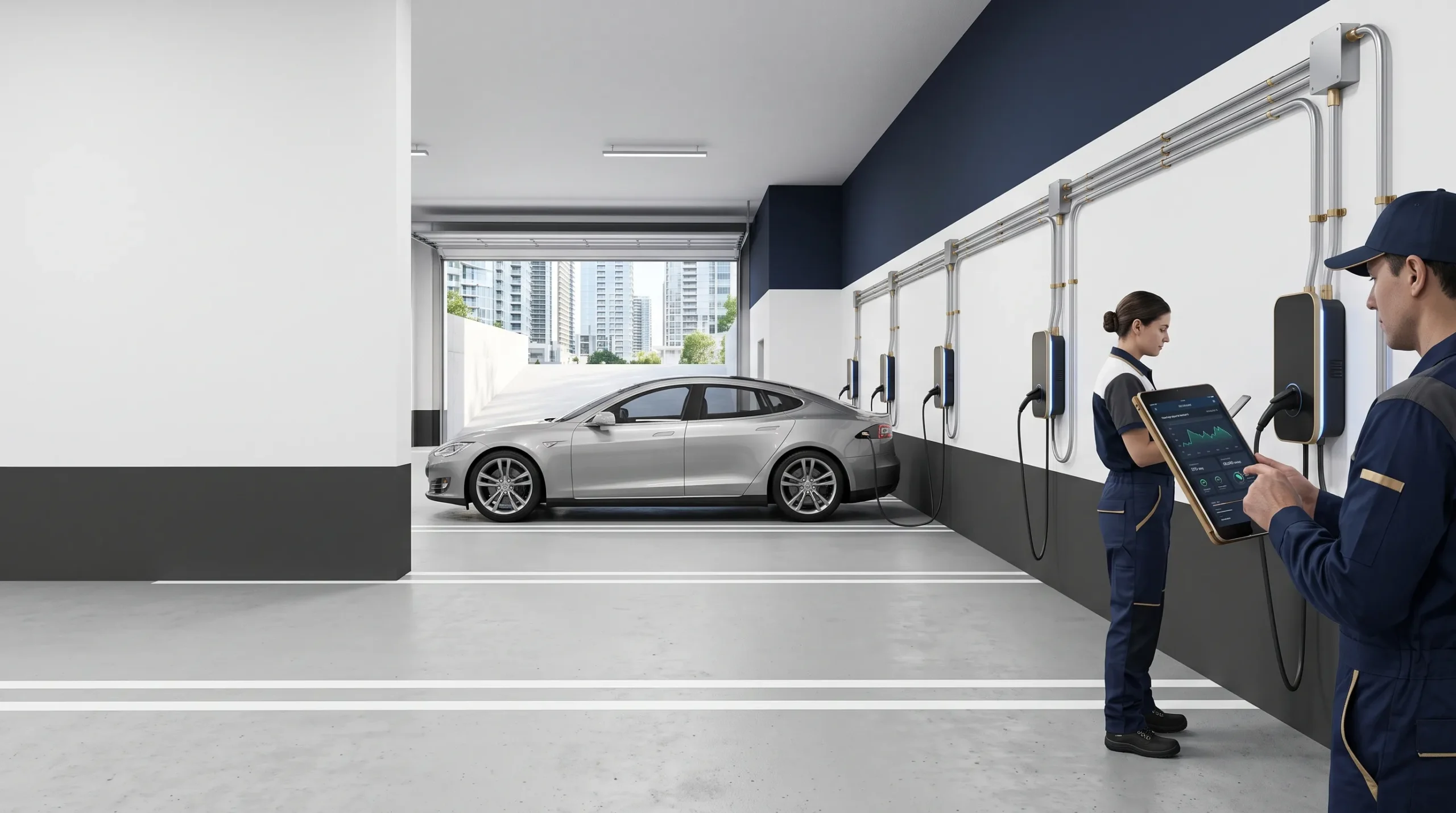
Condo EV charger installation in Toronto usually involves shared electrical systems, underground parking, long conduit routes and coordination with the condominium board or property manager. Installing one independent charger without considering future demand can make later expansion unnecessarily difficult or expensive.
A building-wide EV charging plan can establish a shared distribution system, reserved electrical capacity, load-management rules, approved equipment and a consistent process for adding residents over time. It can also simplify billing and reduce the need for each owner to create an independent electrical route.
Learn more about EV charging for condos and homes.
Commercial EV Charger Installation Toronto
Commercial EV charger installation in Toronto can support employees, customers, tenants, fleet vehicles and members of the public. Charger quantity and power should be based on parking duration, vehicle turnover, operating hours, expected utilization and the commercial objective of the site.
Commercial EV charging stations may be suitable for:
- Office and employee parking
- Retail and customer charging
- Hotels and hospitality properties
- Hospitals and institutional facilities
- Public and private parking garages
- Fleet depots and service vehicles
- Industrial and warehouse properties
- Mixed-use residential and commercial buildings
Explore Smartopia’s EV charging solutions for commercial buildings.
Home EV Charger Installation
Home EV charger installations typically use a dedicated Level 2 circuit. The electrical panel, service capacity, cable route, parking position and outdoor exposure must be evaluated before selecting the charger amperage.
A higher-powered charger is not automatically the best option. Available electrical capacity, vehicle capability, parking time and daily driving requirements should determine the appropriate charging configuration.
Level 2 vs DC Fast Charging: Which System Is Appropriate?
| Consideration | Level 2 Charging | DC Fast Charging |
|---|---|---|
| Typical application | Condos, homes, offices, hotels and long-duration parking | Fleet depots, public charging and high-turnover locations |
| Vehicle connection time | Several hours or overnight | Shorter charging sessions |
| Electrical demand | Moderate and suitable for managed multi-charger systems | High and may require major electrical or utility upgrades |
| Infrastructure cost | Generally lower | Substantially higher |
| Primary planning requirement | Scalability, billing and load sharing | Utility capacity, utilization and operational demand |
Level 2 EV chargers are normally the practical choice for residential and workplace parking because vehicles remain parked long enough to charge at a moderate rate. They can also be distributed across a larger number of parking spaces when supported by an appropriate load-management system.
DC fast charging is designed for commercial applications where vehicles require faster turnaround. It can support public charging, transportation fleets and high-utilization sites, but it requires significantly more electrical capacity and may involve utility-side infrastructure.
Charger power should be matched to actual operational requirements. Installing excessive capacity can increase infrastructure costs and reduce the number of vehicles that can charge within the building’s available electrical supply.
Electrical Capacity, EV Load Management and Phased Expansion
Electrical capacity is one of the most important parts of EV charger installation in Toronto. A load assessment determines whether the existing electrical service can support the proposed chargers and whether load management, new distribution equipment or a service upgrade should be considered.
What Is Dynamic EV Load Management?
Dynamic EV load management controls how much power is delivered to connected charging stations. Instead of assuming that every charger will operate at maximum power simultaneously, the system distributes available capacity according to real-time building demand and charging activity.
Depending on the selected design, EV load management can:
- Prevent charging demand from exceeding a configured power limit
- Share available power between multiple vehicles
- Reduce charging output during periods of high building demand
- Increase charging output when additional capacity becomes available
- Prioritize fleet or operationally critical vehicles
- Support more chargers without immediately upgrading the main service
When Is an Electrical Service Upgrade Required?
Load management can reduce unnecessary upgrades, but it cannot create unlimited electrical capacity. A service upgrade may still be required when the existing equipment has insufficient capacity, the planned charging demand is high or the property intends to install DC fast charging.
Non-residential projects may also require coordination with Toronto Hydro. Its preliminary consultation process can provide high-level information about capacity at the connection point, potential upgrades, project complexity and estimated connection costs.
Building an EV-Ready Expansion Plan
A phased expansion plan allows a property to install the chargers required today while preparing for future demand. The initial phase can include suitable distribution equipment, reserved electrical capacity, network architecture and conduit routes for additional parking spaces.
This approach can reduce repeated construction, simplify future approvals and create a consistent technical standard for every charger added to the property.
Condo EV Charger Approvals in Ontario
Ontario provides specific processes for EV charging installations initiated by condominium corporations and individual owners. The appropriate process depends on who proposes the installation, the affected common elements, the estimated project cost and the condominium corporation’s governing documents.
Information a Condo Board May Require
- Electrical load assessment and proposed charger power
- Charger model and Canadian certification information
- Electrical drawings and the proposed conduit route
- Parking-space and common-element impact
- Load-management and future expansion strategy
- Installation, ownership and maintenance responsibilities
- Energy measurement and resident billing method
- Insurance and Licensed Electrical Contractor information
- ESA notification and inspection requirements
- Restoration or equipment-removal responsibilities
Condo boards and owners should review current guidance from the Condominium Authority of Ontario and obtain legal advice when interpreting their declaration, by-laws, rules or approval obligations.
Individual Installation vs Building-Wide Infrastructure
An individual installation may be suitable when the electrical source is close to the parking space and the building has a documented process for supporting future charging requests. A building-wide approach is usually more scalable when multiple residents are expected to request chargers.
The building-wide model can create standardized charger requirements, centralized energy management, automated billing and a repeatable process for connecting additional parking spaces.
Smart Charging, User Billing and Network Integration
Networked EV charging stations can identify users, record energy consumption, apply access rules and provide property managers with operational reports. Network design is particularly important in underground garages where standard Wi-Fi or cellular coverage may be limited.
A commercial charging-management platform may support:
- RFID cards, mobile applications or account-based access
- Private, tenant-only, employee or public charging
- Energy-based, time-based or session-based pricing
- Idle fees and parking-management policies
- Automated resident, tenant or employee billing
- Charger availability and fault notifications
- Remote diagnostics and firmware management
- Energy, revenue and utilization reporting
- Load-management schedules and charging priorities
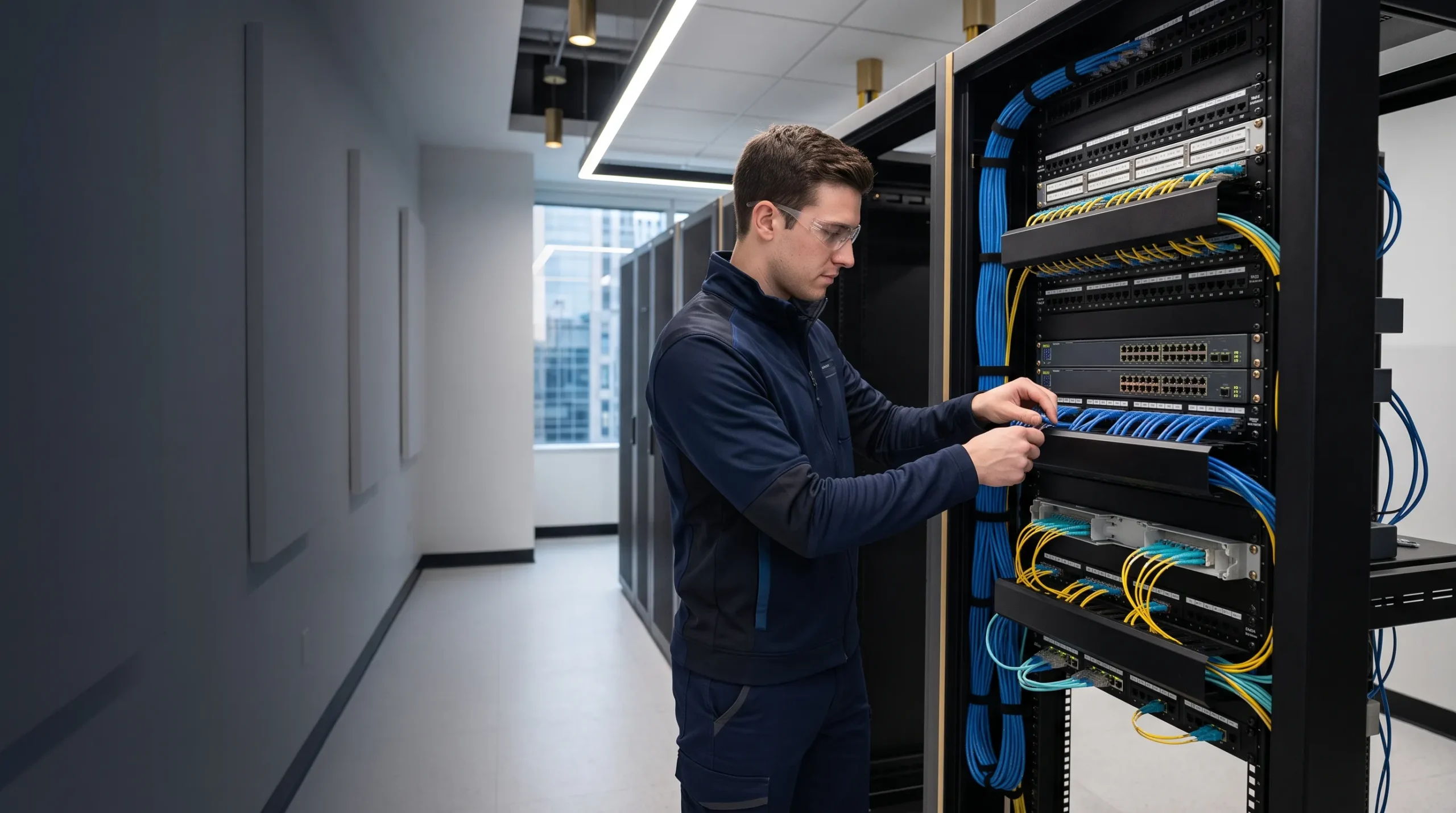
Reliable connectivity may require a dedicated network rather than depending on general-purpose building Wi-Fi. Smartopia can coordinate the charging network with the property’s building-wide networking and Wi-Fi infrastructure.
Why OCPP Compatibility Matters
The Open Charge Point Protocol connects compatible charging stations with charging-management systems. Selecting appropriately tested OCPP-compatible equipment can provide property owners with greater flexibility when evaluating charging hardware, management software and network operators.
OCPP compatibility alone does not guarantee that every charger will support every software feature. Charger firmware, protocol version, payment functionality, load management and platform certification should be confirmed before equipment is purchased.
Building Management System Integration
Where supported, the EV charging system may exchange operational information with a building management system. Integration can help facility teams review charging demand alongside other major building loads, but control responsibilities, communication failures and fallback operation should be clearly defined.
How Much Does EV Charger Installation Cost in Toronto?
The cost of EV charger installation in Toronto cannot be determined from the charger price alone. A short residential circuit and a networked condo parking garage require completely different infrastructure, approvals, equipment and labour.
The main factors affecting EV charger installation cost include:
- Number and power rating of charging stations
- Available capacity in the electrical service and panels
- Distance between electrical equipment and parking spaces
- Conduit, trenching, coring and fire-stopping requirements
- Indoor or outdoor installation conditions
- New panels, transformers or utility upgrades
- Dynamic load-management equipment
- Network infrastructure and recurring software fees
- Payment processing and user-billing requirements
- Engineering, permits, inspections and documentation
- Protection bollards, signage and cable management
- Commissioning, training and maintenance coverage
For condos and commercial properties, the quotation should separate shared infrastructure costs from the cost of individual charging stations. It should also identify recurring network, technical support, payment-processing and telecommunications fees.
Property owners should evaluate the total cost of ownership rather than selecting equipment only by its initial purchase price. A low-cost charger can become expensive if it depends on restrictive software, has limited parts availability or cannot support future expansion.
EV Charger Hardware Selection Checklist
Charger selection should take place after the electrical and operational assessment. Before purchasing equipment, property owners should consider the following questions:
- Is the equipment approved for use in Canada?
- Is it rated for the intended indoor or outdoor environment?
- Which vehicle connectors must be supported?
- Does the charger support the required OCPP version?
- Can it participate in the proposed load-management system?
- Can the network operator be changed if business requirements change?
- How are transactions handled if connectivity is interrupted?
- What warranty, spare-parts and technical-support options are available?
- Who owns the user, energy and payment data?
- What recurring software and transaction fees apply?
EV Charger Installation Process
- Discovery and usage assessment: Define the property type, intended users, vehicles, parking duration, charging objectives and expected future growth.
- Site and electrical assessment: Review service capacity, electrical equipment, demand history, parking layout, cable routes and network availability.
- Concept design: Select the charging level, distribution architecture, load-management method, connectivity and billing model.
- Stakeholder approval: Prepare the information required by the property owner, condo board, property manager, utility and other responsible parties.
- Detailed engineering and procurement: Finalize the drawings, equipment, charger locations, network requirements and installation schedule.
- ESA notification and installation: The Licensed Electrical Contractor files the required notification and completes the regulated electrical work.
- Configuration and commissioning: Test charger operation, electrical protection, communications, access rules, load management, reporting and payment functions.
- Handover and lifecycle support: Provide the available drawings, permits, acceptance records, settings, credentials, warranties and operating procedures.
Testing and Documentation After Installation
A professional handover should make the EV charging system understandable and maintainable. The documentation provided will depend on the project scope, but it may include:
- ESA notification and Certificate of Acceptance
- Electrical drawings and panel schedules
- Charger model, serial number and location records
- Load-management configuration
- Network and communication information
- Administrator accounts and access-control procedures
- Billing and pricing configuration
- Commissioning and operational test results
- Warranty and maintenance information
- Process for adding future chargers or users
EV Charger Maintenance and Operational Support
EV charging stations combine electrical equipment, communications hardware and management software. Maintenance should therefore cover more than visible physical damage.
Ongoing EV charger support may include:
- Visual inspection of cables, connectors and enclosures
- Review of charger faults and unsuccessful charging sessions
- Network and communication monitoring
- Firmware and charging-platform coordination
- Verification of payment and user-access functions
- Review of load-management performance
- Cleaning, signage and parking-space inspection
- Replacement planning for damaged or obsolete equipment
The service agreement should clearly identify who responds to electrical faults, network failures, payment problems and user-support requests.
How to Choose an EV Charger Installer in Toronto
Compare EV charger installers using the complete project scope rather than charger price alone. Ask each provider to explain:
- Who will complete and take responsibility for the electrical work?
- How will the property’s electrical capacity be assessed?
- When is load management preferable to a service upgrade?
- How will future chargers be added?
- Which charger manufacturers and software platforms are supported?
- Is the proposed system dependent on one proprietary network?
- What happens if the internet connection becomes unavailable?
- How are users authenticated and billed?
- Which one-time and recurring fees are included?
- What permits, drawings and acceptance records will be provided?
- Who provides warranty, maintenance and after-hours support?
Smartopia evaluates the electrical, networking and building-technology requirements together so that the charging system can operate as part of a maintainable property infrastructure plan.
Learn more about Smartopia’s technology-integration approach.
EV Charger Installation Toronto FAQs
Who provides EV charger installation in Toronto?
Smartopia supports EV charger installation planning and system integration for homes, condos, commercial properties and mixed-use buildings in Toronto and the GTA. Regulated electrical work must be completed through a Licensed Electrical Contractor with the required ESA notification and inspection.
Does every EV charger installation require an ESA permit?
The Electrical Safety Authority states that a notification of work must be filed before an EV charger installation begins. After the installation has been accepted as compliant, the Licensed Electrical Contractor should provide the customer with an ESA Certificate of Acceptance.
How much does EV charger installation cost in Toronto?
The cost depends on charger quantity, power rating, electrical capacity, cable distance, parking layout, load management, network connectivity, utility work and required construction. A site and electrical assessment is necessary before an accurate project quotation can be prepared.
Can an EV charger be installed without upgrading the electrical service?
Sometimes. If sufficient electrical capacity is available, the charger may be connected without a service upgrade. Dynamic load management can also limit charging demand, but a load assessment is required to determine whether this approach is suitable for the property.
What approvals are required for condo EV charger installation?
Condo installations normally require coordination with the condominium corporation or property manager, technical documentation and an ESA notification. Ontario has separate approval processes for installations initiated by an individual owner and those initiated by a condominium corporation.
How are condo residents or employees billed for charging?
Networked chargers can associate charging sessions with registered users and calculate charges using energy, time or session rules. The selected platform should clearly disclose payment fees, electricity recovery, taxes, idle fees and administrative responsibilities.
Can a property start with a small number of chargers and expand later?
Yes. A phased EV charging infrastructure plan can install the chargers required immediately while reserving electrical capacity, distribution equipment, network resources and conduit routes for future parking spaces.
Is Level 2 or DC fast charging better?
Level 2 charging is usually appropriate for homes, condos, workplaces and locations where vehicles remain parked for several hours. DC fast charging is more suitable for public, fleet and high-turnover commercial applications, but it requires substantially more electrical capacity.
What happens when a networked EV charger loses internet access?
The result depends on the charger and management platform. Some systems can authorize approved users and store transactions locally until connectivity returns. Offline operation, data synchronization and payment handling should be confirmed during equipment selection.
Should a commercial property require OCPP-compatible chargers?
OCPP compatibility can improve flexibility between charging hardware and management platforms. However, the protocol version and supported functions should be verified because OCPP compatibility does not automatically guarantee that every software feature will operate.
Are EV charger incentives always available?
No. Federal, provincial, utility and municipal programs can open, change or close. Property owners should verify current eligibility, application deadlines and approval requirements before including an incentive in the project budget.
Official EV Charging Resources
- Electrical Safety Authority: Electric Vehicles and Charging Systems
- Electrical Safety Authority: EV Chargers in Condo and Multi-Residential Buildings
- Condominium Authority of Ontario: EV Charging Systems Guide
- Toronto Hydro: Non-Residential EV Charging Connections
- Natural Resources Canada: Electric Vehicle Charging
- Open Charge Alliance: Open Charge Point Protocol
Plan Your Toronto EV Charger Installation
Discuss your property, parking layout, electrical capacity, charging demand, user billing and expansion requirements with Smartopia. A structured assessment can identify an appropriate charger type, load-management strategy, network design and implementation plan.

Comments are closed